























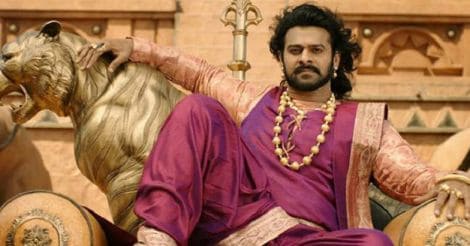
 A still from the movie
Widely touted as India’s answer to Hollywood period spectacles such as 300, Ben-Hur, Troy and Gladiator, Telugu hitmaker S.S. Rajamouli’s magnum opus, Baahubali 2: The Conclusion is still running to packed houses, although it has been almost three weeks since it was released.
But sadly, the period action extravaganza has come in for criticism from various corners despite the fact that it’s at par with Hollywood movies of the same ilk.
Although the plot as such is fictitious, a discerning viewer can see how Rajamouli has picked up threads from Indian and Greek mythology to weave his epic drama.
Baahubali is someone straight out of the books – a superhero who is as strong as the Greek mythical figure Hercules and his Indian counterpart Bhimasena; a warrior reminiscent of Trojan war hero Achilles and Pandava prince Arjuna.
Baahubali's stay at Devasena's kingdom in disguise to teach her archery reminds us of Arjuna's stay at princess Uthara's kingdom impersonating a eunuch (Brihannala). Just like Arjuna protects Uthara's kingdom, Baahubali shields Devasena's kingdom from its enemies.
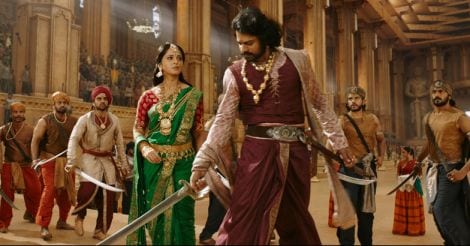
The film also shines spotlight on the many war strategies of Indian epics and Greek myths. The fact that many of them were unrealistic did not matter at all as flying vehicles and talking animals were nothing new to us Indians. Compared to Baahubali, Wolfgang Petersen's Troy used much more realistic war strategies and perhaps for the same reason, drawing a comparison between the two provides for some great amusement at the sub-conscious level.
Nevertheless, the movie is also very progressive in its portrayal of women characters, viz., Rajmata Shivagami and Devasena. Unlike traditional heroines, Devasena defends herself – physically and verbally – and stands up against injustice. She even makes Baahubali understand that his mother can sometimes go wrong.
Apparently, Baahubali’s certitude to speak for his wife against his ruling step-mother gives more depth to his character. He’s portrayed as a selfless man when he gives up his kingdom for his wife. The readiness of the couple to accept an ordinary life among their own subjects gives a social relevance to the story. Similarly, Baahubali’s son Sivudu’s attempt to create an uprising against the devilish autocrat gives the film a modern revolutionary outlook.
One of the main contentions against the film was that it endorses caste system. But the reality is that the film talks about an era of caste discrimination. There are clear indications in the storyline that the film as a whole is against the caste system. Exposition of caste system cannot be considered as endorsement of the same.
All in all, visual beauty is the most important component of Baahubali 2: The Conclusion, which uses all essential ingredients of a mythical film so judiciously that the audience will remember it for a very long time.
(The author is a faculty member of Department of English, Marian College Kuttikkanam)
